
As you descend into the Blitz exhibition at London’s Design Museum, the atmosphere is charged by the unmistakable call of 80s synth pop. It establishes the sense of expectation familiar to anyone who has waited outside a nightclub door.
From 1979, Tuesday nights at the Blitz wine bar in Covent Garden were a home for the avant-garde and the birthplace of an emerging subgenre–New Romanticism. The club night ran for just 18 months, but its legacy was to sculpt the distinctive sound and style of the 1980s.
The exhibition begins by tracing the cultural origins that set the stage for the movement. The soul scene and drag culture contributed significantly, as well as European ideals that made their way to Britain, reflected in films like Cabaret and the New Objectivity art movement, pioneered by German artists. The room offers a compelling introduction into the cultural catalysts that gave rise to the New Romantics.
Moving into the second room, the gallery examines how the community within the bar’s immediate vicinity laid roots for the movement. Blitz bar was in proximity to Central and St. Martin’s Schools of Art and the surrounding vacant housing, where many students squatted, drawing a swell of young visionaries into its orbit. A rotary dial phone invites visitors to eavesdrop on interviews with ‘Blitz Kids’ as they reminisce on their London escapades. These dial-up conversations are a charming nod to the word of mouth networks that fused the scene together. To be invited, you needed to be part of the surrounding art and punk community, but most importantly, you needed to share in the collective commitment to a daring and experimental visual culture, expressed through fashion, performance or photography.
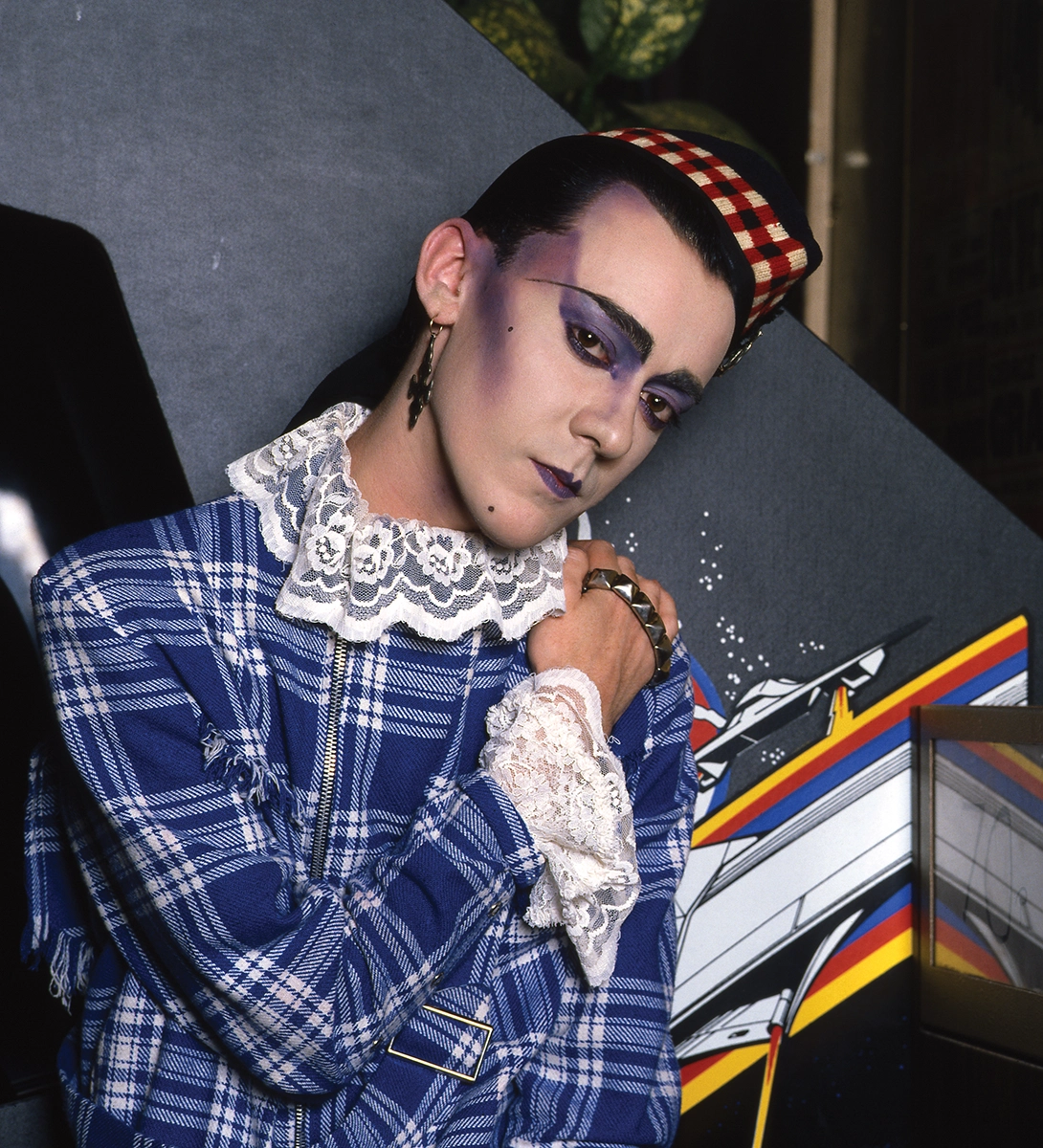


Walls adorned with c-type prints offer the first glimpse into the New Romantic style, an unapologetic rejection of uniformity and relishing embrace of camp dandyism. The intimate portraits celebrate individualism and reinvention, while garment displays and anecdotes of reimagined clothing underscore a communal ethos.
Halfway through, the exhibition opens into a replica of the Blitz dance floor, rebuilt in all its faded glory. A bar lines the edge, chairs empty, cigarettes stubbed and forgotten. The only light that casts the room comes from the projection of a performance by Spandau Ballet, the only band to ever perform live at the Blitz. Without the buzz of the ‘Blitz Kids’, there is something ghostly about the space. A feeling that you’ve RSVP’d a little too late– the party is over and you’re wandering through the shadow of someone else’s revelry.

The exhibition then plunges into the vibrant world of new wave media and fashion. Garments and jewellery from the era command the space, showcasing how the students transformed second-hand finds into an avant-garde manifesto. The walls are lined with i-D and The Face, publications that chronicled the visual rebellion in real time. The room unpacks the birth of the independent fashion labels forged in the ‘Blitz Kid’s’ creative ecosystem, and their relationship with the new expressive publications that championed this shared vision.
As I near the end of the exhibition, I find myself drawn to what they have, wrestling with a dissatisfaction at how conditional our freedom feels. The Blitz Kid’s rebellion was larger than life, uninhibited and accountable only to themselves. Risk in visual culture today feels flattened in comparison, with each gesture warped by a desire for virality and affirmation. Rebellion only has a place today if it's marketable and repeatable. The New Romantics inhabited their world with improvised, contagious brilliance. Perhaps that’s why we flock to spaces like this, to feel its traces.

I try to set the feeling aside as I enter the final section of the exhibition that gazes forward at the shift in music media that defined the 1980s– the dawn of the MTV generation. Melodrama and spectacle, once confined to club nights, exploded onto a global stage through music videos. Blitz Kids like Boy George were poised to lead this new era of pop stardom. The Buggles “Video Killed The Radio Star” was MTV’s first ever broadcast, symbolising a new era that would change music media forever, an elegant statement that ends the exhibition. It makes clear that the Blitz Kids were never just a subculture, but the blueprint for the identity and pulse of the 80s.
Blitz: the club that shaped the 80s is open at the Design Museum London until March 29.
Read More

A Walk Through Cob Gallery's Construct With Curator Brooke Wilson
Art

‘Raw, Political and Personal’ - Meet Elena Garrigolas, the Spanish artist bridging a history of feminist art and 21st century internet culture
Art